AIM Solar – PV Shading
Shading structures - energy generation
With the AIM (Adaptive Inclination Mounting) Solar system, photovoltaic panels generate electricity while simultaneously serving as building solar shading. This dual functionality improves both the external energy footprint and the internal climate of the building.
Increased power generation during peak demand
Dynamic inclination for optimized output during peak hours
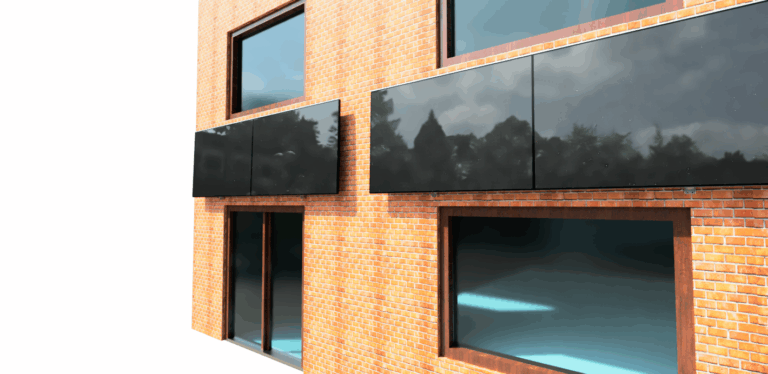
With the patented AIM (Adaptive Inclination Mounting) Solar system, solar panels are installed on the facade directly above windows and glazed structures. Instead of a fixed tilt optimized only for solar noon on a summer day, the system automatically adapts its inclination angle throughout the day based on the position of the sun. This results in an increased energy yield compared to traditional static systems. This additional output is highest during winter, as well as morning and evening hours—precisely when grid electricity is scarce, costly, and critical for building systems.
Reduction of overheating
Passive climate control and lower cooling demands
The AIM system functions as both an active energy source and an automated shading solution. By blocking intense summer solar radiation outside the glazing line, structural overheating of the interior is prevented. 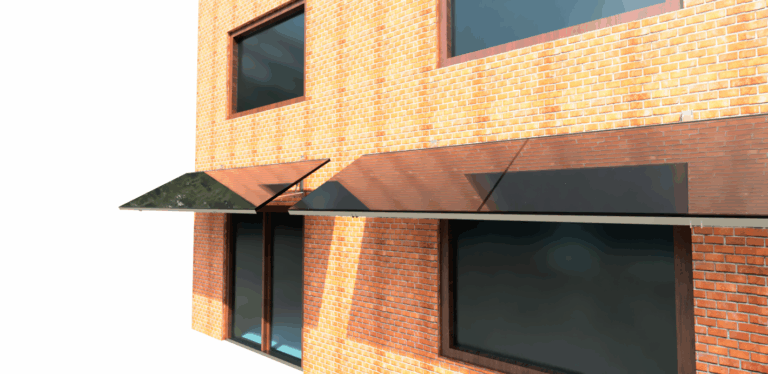 This reduces thermal stress for occupants and lowers the energy demand for active air conditioning systems. During the cold winter months, the system retracts automatically, allowing low-angle sunlight to penetrate the building unobstructed for passive heating, day-lighting, and occupant well-being.
The AIM system
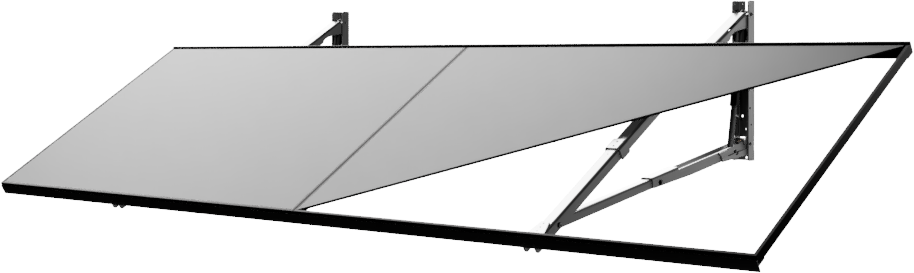
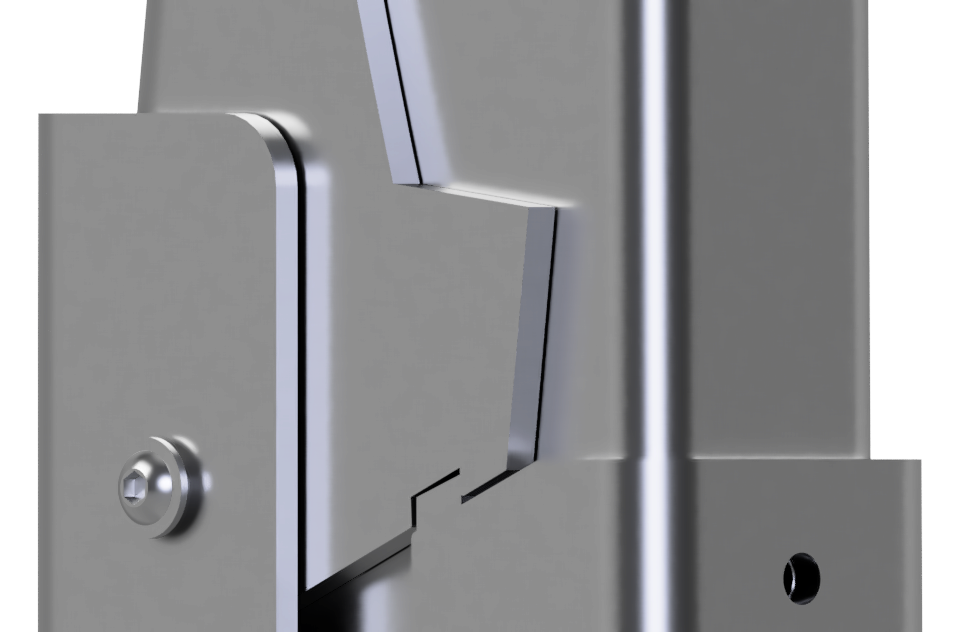
The patented AIM system consists of two structural support frames designed to mount two landscape-oriented solar panels directly onto a facade. Driven by industrial actuators, the exact position and inclination angle of the solar panels are dynamically adjusted. The inclination varies continuously from an angle of 30 degrees (optimized for high solar positions in Western Europe) to a fully vertical position (optimized for low sun angles near the horizon). Due to the mechanical geometry, the solar panels move linearly downwards as they tilt open. This maximizes shading on the glass surface around midday without obstructing the internal line of sight. At lower sun angles, the panels lift higher and flat against the facade, leaving the window completely unobstructed to maximize natural light entry.
Extension and retraction
Each structural arm is equipped with a robust linear actuator. Extending the actuator decreases the inclination angle, moving the solar panels downwards into the shading position. Retracting the actuator increases the angle relative to the horizontal plane, lifting the panels into the vertical facade position. These movements are coordinated by a central controller. 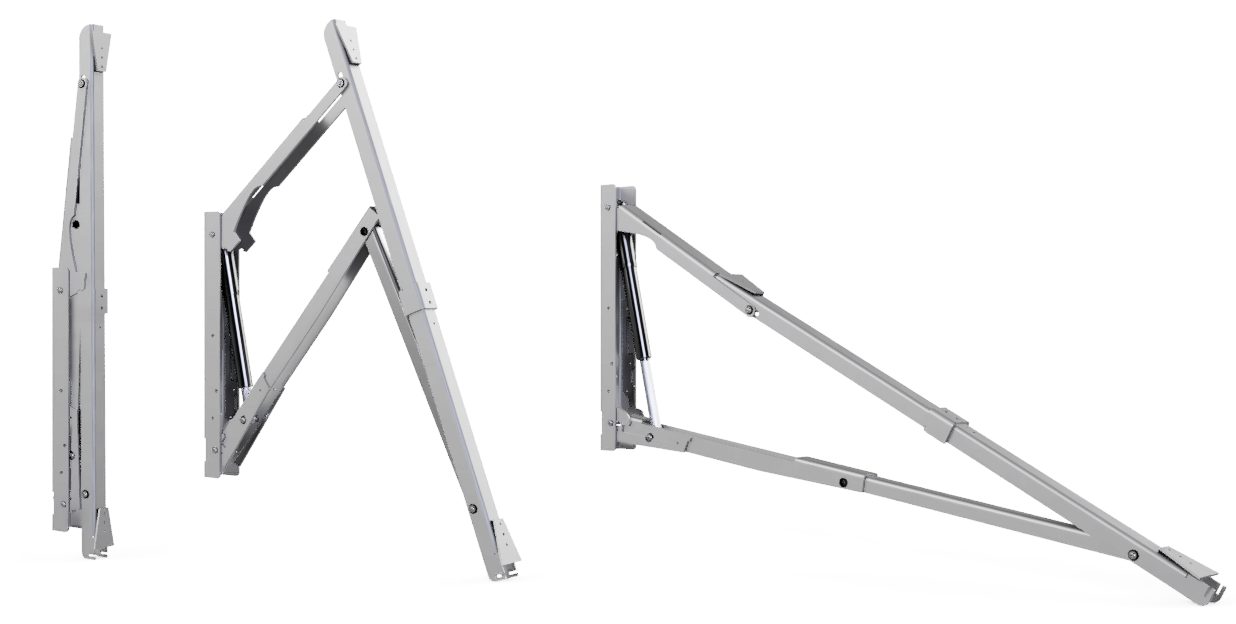 Because changes in the solar position are marginal within short timeframes, the controller optimizes the panel angle based on an interval of 30 minutes. This algorithm calculates the ideal position using the exact geographical location, date, and time. This interval control eliminates unnecessary micro-corrections, minimizes system power consumption, and limits mechanical wear to a minimum.
Controller and safety
The controller also provides building managers or end-users with the flexibility to manually set the position of the panels via an interface. Although the mechanical frames are structurally engineered to withstand severe storm conditions in any position—adhering to the safety margins prescribed by applicable building standards for facade-mounted solar installations (such as NEN 7250)—the controller features a proactive safety function. The controller monitors local meteorological data and weather forecasts at regular intervals. Operating on a fail-safe configuration—triggering a defensive lock if a clear connection confirming stable weather is absent—the system automatically shifts into a mechanically locked layout during storm alerts to protect the long-term structural integrity.
Materials and durability
Component materials are selected to match the operational life cycle of the solar panels with minimum maintenance. Shafts and profiles are manufactured from treated stainless steel, eliminating the need for subsequent surface coatings for decades. The actuators are built from anodized aluminum and carry an IP67 rating, ensuring full weatherproofing against external environmental conditions.
Social Housing Associations
Meeting building energy regulations without increasing operational maintenance costs
Housing associations face the challenge of upgrading existing building stocks to higher energy efficiency standards while protecting tenant comfort. Controlling summer overheating has become a strict regulatory requirement for major building renovations. Many housing providers consider active air conditioning systems to meet these standards.
While active cooling temporarily addresses indoor comfort, it introduces long-term operational bottlenecks. Active systems increase tenant electricity bills, impacting energy poverty initiatives, and dump extracted heat into the street, which contributes to the urban heat island effect. For the housing provider, active cooling adds significant liabilities to the multi-year maintenance budget (MJOP), as hundreds of external compressor units require regular servicing, cleaning, and technical interventions.
The AIM system addresses this technical and financial dilemma through a passive mechanical solution. Instead of counteracting heat build-up after the fact using active machinery, the AIM system prevents solar heat from passing the glazing line. Indoor temperatures remain lower and regulatory overheating risks are mitigated, while sustainable electricity is simultaneously generated for the tenant. This is achieved via a robust structure that places virtually no demands on operational maintenance budgets.
Commercial & Institutional Real Estate
The path to carbon reduction within grid-capacity constraints
Owners and managers of commercial and institutional real estate—such as offices, schools, and healthcare facilities—operate under strict regulatory pressure. With mandatory minimum energy efficiency requirements for office buildings and increasing reporting obligations under the Corporate Sustainability Reporting Directive (CSRD), reducing carbon footprints is a business necessity.
At the same time, real estate projects across Western Europe are restricted by grid congestion, where grid operators frequently delay or deny requests for higher-capacity grid connections for large solar arrays.
The AIM system provides commercial real estate a strategic pathway out of this gridlock by lowering energy demand and optimizing decentralized generation simultaneously. By reducing active cooling loads on hot days, primary building energy consumption drops significantly, improving energy performance ratings. Concurrently, the system generates clean electricity on facade surfaces during business hours, when operational building demand and electricity tariffs are highest.
This synergy between passive cooling and targeted generation allows portfolios to decarbonize within the limits of their existing grid connections, eliminating external delays from grid operators.
Installing the AIM System
Designed for efficient layout positioning and structural facade anchoring
The AIM Solar system is engineered for a straightforward and rapid installation workflow. Because the physical components are secured to the facade structure via anchored threaded rods, verifying the structural integrity of the baseline gevel composition is a prerequisite to safely handle secondary wind loads. To guarantee secure physical coupling, industry-vetted anchoring solutions from established manufacturers such as Hilti or Fischer should be deployed. It is recommended to consult these manufacturers directly for project-specific engineering calculations when dealing with complex wall structures.
AIM Solar supports this validation phase by providing the official KIWA-certified structural wind load data metrics that establish our core product certification parameters.
Contact and information
AIM Solar
Rozenboomlaan 10
2271VM Voorburg
The Netherlands
Chamber of Commerce: 87068664
Tel: +31 6 8665 6316
Email: info@ aimsolar.nl